If you’re asking where do I register my dog in Cowley County, Kansas for my service dog or emotional support dog, the most important thing to know is this: dog registration (often called a “dog license” or “pet license”) is usually handled locally by the city you live in—while rabies investigations and bite reporting are often handled by public health.
This page explains how a dog license in Cowley County, Kansas typically works, which official offices to contact first, how rabies vaccination ties into licensing, and why a dog license is different from service dog legal status or an emotional support animal (ESA) letter.
Where to Register or License Your Dog in Cowley County, Kansas
Because licensing is often handled at the city level, start with the city office for where you live (for example, Arkansas City or Winfield). If your question is tied to rabies enforcement, animal bite reporting, quarantine rules, or public health guidance, the City–Cowley County Health Department is a key contact. If you’re dealing with strays or enforcement inside certain city limits, the local animal control dispatch may be appropriate.
City of Arkansas City (City Hall / City Clerk)
Arkansas City Police Department (Animal Control / Dispatch)
City–Cowley County Health Department (Winfield Office)
City–Cowley County Health Department (Arkansas City Office)
City of Whitewater (Animal Control / City Office)
Cowley County Humane Society (Shelter / Stray Holding in Some Cases)
Overview of Dog Licensing in Cowley County, Kansas
What “registering your dog” usually means
In everyday terms, “registering your dog” in Cowley County usually means getting a local dog license (often a tag and a record on file) from the city where you live. People also use “registration” to refer to a rabies tag issued by a veterinarian after vaccination, but that’s not the same thing as a municipal dog license.
Why the answer depends on your address
Cowley County contains multiple jurisdictions and communities. In Kansas, it’s common for animal ordinances and licensing to be handled by cities (City Hall, City Clerk, Finance/Utility offices, or Police/Animal Control), while the county and public health partners may handle rabies investigations, bite reporting coordination, and related public health guidance.
Core idea for SEO: start local, then confirm county/public health needs
If you’re trying to figure out where to register a dog in Cowley County, Kansas, start with your city office for the pet license, and contact public health when your question involves rabies exposure, quarantine, or reporting. If you’re specifically looking for an animal control dog license Cowley County, Kansas office, that often means a city animal control or city clerk function rather than a single countywide office.
How Dog Licensing Works Locally in Cowley County, Kansas
Step 1: Identify your licensing authority (city vs. unincorporated county)
First, confirm whether your home address is inside a city limit (such as Arkansas City, Winfield, Whitewater, or another incorporated community) or in unincorporated Cowley County. In most cases:
- Inside city limits: your city office (often City Clerk/City Hall) handles licensing and tags.
- Animal control enforcement: typically handled by the city’s animal control program or police department function.
- Rabies and bite reporting: often involves the City–Cowley County Health Department, especially for investigations and public health steps.
Step 2: Prepare your documents
Local licensing commonly requires proof that your dog is currently vaccinated against rabies. Some cities may also request proof of residency, identification, and payment of a licensing fee. Requirements can vary by community and may change year to year.
Step 3: Get the license/tag and keep it current
A typical licensing process results in a city-issued tag (or a record confirmation) that links your dog to your contact information. Keeping the license current can help if your dog is found as a stray and may help demonstrate compliance during an animal control encounter.
Rabies vaccination requirements (why they matter for licensing)
Even if your dog is a service dog or an emotional support animal, rabies vaccination rules still apply. Rabies compliance is also a practical “gatekeeper” for licensing in many communities because it supports public safety, bite response, and quarantine decisions.
Service Dog Laws in Cowley County, Kansas
A dog license vs. service dog status
A dog license in Cowley County, Kansas (issued locally by a city) is an animal ordinance tool. It usually helps cities track pets, encourage rabies vaccination, and support animal control enforcement. It does not grant federal service dog protections.
What makes a dog a “service dog”
In general U.S. terms, a service dog is trained to perform tasks directly related to a person’s disability. The right to have a service dog in many public places is based on disability law—not on a city license, a vest, an ID card, or an online registry.
Do service dogs need local licensing?
Often, yes. Even when a dog qualifies as a legitimate service animal, local animal rules can still require rabies vaccination and a local license/tag. If you’re unsure whether your city offers any fee reductions or exemptions for trained service animals, ask your city clerk’s office directly.
Emotional Support Animal Rules in Cowley County, Kansas
What an ESA is (and is not)
An emotional support animal (ESA) generally provides comfort through its presence, but it is not the same as a service dog trained to do specific disability-related tasks. An ESA letter or recommendation does not replace local animal licensing requirements.
Do ESAs require dog licensing?
Yes in most cases. If your community requires licensing, your ESA is still a dog under local ordinances. That means you should plan to meet the same baseline requirements (such as rabies vaccination proof and local tag rules).
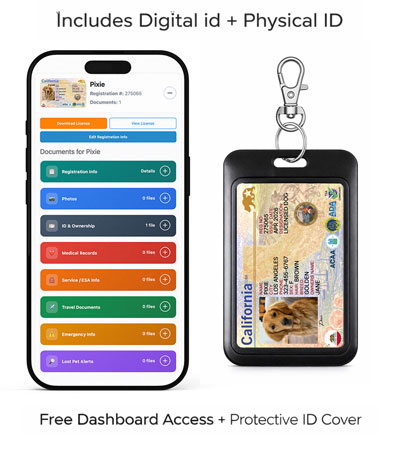
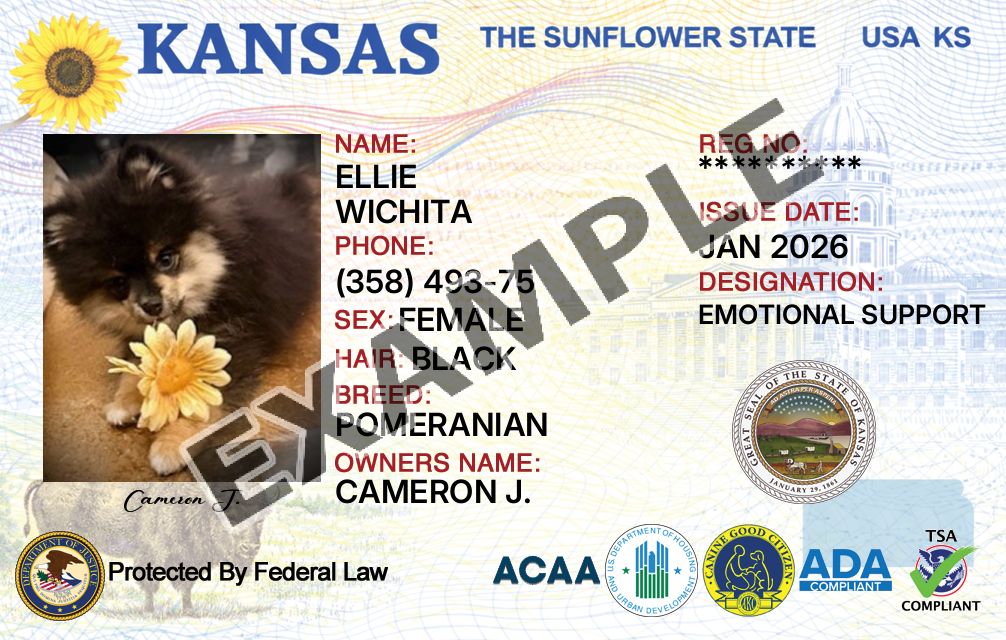
Common confusion: “registration” websites
Many people searching “where do i register my dog in Cowley County, Kansas for my service dog or emotional support dog” run into third-party “registries.” Those are different from a city dog license. For compliance with local ordinances, focus on official city or county/public health contacts rather than third-party services.